Kuchchaveli, Sri Lanka — September 26, 2026:
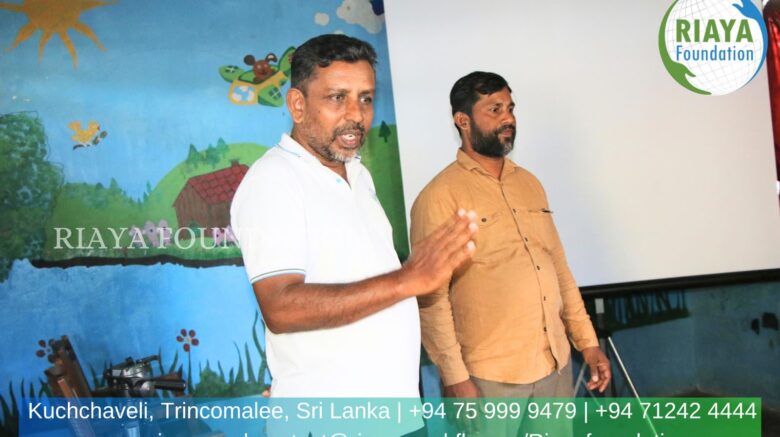
The RIAYA Foundation has successfully conducted a pilot session for its new STEM and AI-focused education programme in Kuchchaveli, marking an important first step towards its long-term vision of building a generation of globally capable young professionals.
The programme is being delivered by the RIAYA Foundation in collaboration with the Jarvis Institute, Toronto, Canada, and is being facilitated locally through the KEDS Education Center in Kuchchaveli.
The initiative forms part of RIAYA Foundation’s broader vision:
“A Graduate in Every Home.”
Through this vision, RIAYA Foundation aims to support young people with the knowledge, skills, confidence and exposure required to become future professionals capable of contributing not only to Sri Lanka but also to the global workforce.
A first step towards preparing students for the global professional world
The pilot session represents the beginning of a structured educational journey designed to introduce students to emerging technologies, artificial intelligence, creative problem-solving and digital skills.
The programme has been developed as a
partnership between the Jarvis Institute in Toronto and the RIAYA Foundation in Kuchchaveli, connecting educators from Canada with students in Kuchchaveli through live interactive learning. According to the
programme roadmap, the initiative is specifically designed to build AI literacy, creative confidence and problem-solving skills among young people in the community.
Rather than limiting the programme to traditional classroom teaching, students will have oppo
rtunities to interact with AI tools, explore creative technologies and gradually develop practical digital projects.
The initiative is therefore intended to provide students with an early introduction to technologies and skills that are increasingly relevant to the modern professional environment.
12-week structured learning programme
The programme has been designed as a 12-week learning journey, with structured phases and defined objectives for participating students.
The roadmap includes four major learning phases:
Phase 1 – Spark & Talk
During the first stage, students will be introduced to artificial intelligence and learn how to communicate with AI tools using simple prompting techniques.
The programme uses a Tamil-first, English-bridge approach, allowing students to develop their ideas in Tamil before gradually learning how to convert those ideas into simple English prompts.
Phase 2 – Imagine & Visualise
Students will then explore AI image-generation and storytelling tools.
They will have opportunities to transform their creative ideas, local culture and experiences into digital artwork and illustrated stories. The planned milestone includes the development of an AI storybook draft and a customised digital poster.
Phase 3 – Solve & Build
The third phase will focus on problem-solving and practical creation.
Students will identify challenges within their community and explore how AI and digital technologies could help develop solutions. The programme roadmap includes exposure to web-page concepts and simple application ideas, with students working towards a project prototype or app design blueprint.
Phase 4 – Showcase & Lead
The final stage will allow students to present their creations to instructors, fellow students and their families.
Students will be able to present their work in Tamil, English or both languages, with the local facilitator supporting communication with the international teaching team.
At the completion of the programme, students are expected to receive an official SEED Certificate jointly recognised by the Jarvis Institute and RIAYA Foundation.
Strong engagement from students and parents during the pilot
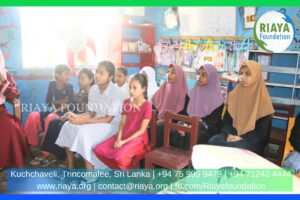
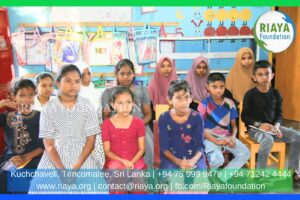
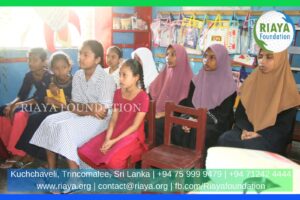
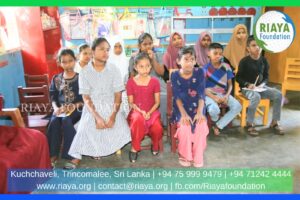
The pilot session conducted yesterday brought together participating students and parents at the KEDS Education Center.
The session provided an opportunity for students and parents to understand the concept of the programme, its objectives and the type of learning experience that will be introduced over the coming weeks.
Students demonstrated considerable interest throughout the session and actively participated in the learning activities.
The interaction between the students, facilitators and AI tools helped create a learning environment that was more engaging and interactive than a conventional classroom session.
Students were encouraged to ask questions, explore ideas and interact with AI rather than simply listen to a lecture.
This approach is particularly important to the RIAYA Foundation because the objective is not merely to teach students about AI, but to help them learn how to learn, experiment, create and solve problems using emerging technologies.
Tamil language support is at the heart of the programme
One of the important features of the initiative is its bilingual learning model.
The RIAYA Foundation recognises that many students in Kuchchaveli are Tamil-medium learners and may not yet have confidence in spoken or written English.
The programme therefore incorporates Tamil-language facilitation throughout the learning journey.
A Tamil-speaking facilitator will be present at the Kuchchaveli centre during live sessions. Key instructions, examples and questions from the international teaching team will be explained in Tamil, while students will also be able to ask questions and communicate in Tamil.
Learning materials will also incorporate English and Tamil, while students will gradually develop the English skills required for AI prompting.
The objective is not to make English fluency a barrier to participation. Instead, the programme aims to help students build functional English AI-prompting skills while protecting the quality of their ideas through Tamil-first learning.
The first official session begins on October 2
Following the successful pilot session, the first official programme session is scheduled to take place on October 2, 2026, at the KEDS Education Center in Kuchchaveli.
The programme roadmap provides for live sessions connecting students in Kuchchaveli with educators from the Jarvis Institute in Toronto. The planned programme structure includes regular live sessions over the 12-week period, supported by on-site facilitation.
The sessions will combine international expertise with local facilitation, creating an opportunity for students in Kuchchaveli to access learning experiences beyond the limitations of their geographical location.
A major challenge: access to devices and learning technology
While the pilot demonstrated strong student interest, it also highlighted an important challenge that needs to be addressed if the programme is to achieve its full potential.
Many participating students currently do not have adequate personal devices or technology tools required for effective participation in an AI-focused learning environment.
AI and STEM education cannot be delivered effectively through demonstrations alone. Students need opportunities to interact directly with digital tools, practise prompting, create digital content and work on projects.
The SEED programme’s technical framework includes the need for appropriate local display and audio infrastructure, reliable internet connectivity and supporting devices for the learning environment.
For this reason, the RIAYA Foundation is actively seeking support from individual donors, organisations, companies, educational partners and other community supporters who are willing to invest in the digital education of children and young people in Kuchchaveli.
An opportunity for donors to directly support students
RIAYA Foundation believes that access to technology should not become a barrier to a student’s potential.
A student may have the curiosity to learn AI, the creativity to develop an idea and the ambition to become a professional, but without access to the necessary tools, that potential can remain unrealised.
The Foundation is therefore seeking support for:
- Laptop and desktop computers
- Tablets and other suitable learning devices
- Internet and connectivity support
- Projector or large-screen display facilities
- Audio equipment
- AI and digital-learning resources
- Sponsorship for students who require additional support
- Other educational technology required for the programme
The Foundation welcomes support from donors who would like to sponsor individual students, contribute devices or provide financial assistance towards the wider programme.
Building measurable outcomes
The programme has been designed with defined learning outcomes rather than simply providing exposure to technology.
By the end of the 12-week programme, students are expected to work towards three key milestones:
1. English AI Prompting
Students will learn basic English prompting structures to interact effectively with AI assistants.
2. Creative Creation
Students will produce a tangible digital creation such as digital art, a digital story or an app prototype.
3. AI Tool Awareness
Students will learn to identify and explain the use cases of at least three different AI tools.
The programme also establishes measurable targets, including a 100% completion target for student creative artefacts and a target of at least 90% of students being able to explain three AI tools and their applications.
From Kuchchaveli to the world
For RIAYA Foundation, this initiative is about much more than introducing students to artificial intelligence.
It represents a broader commitment to creating opportunities for young people in communities where access to advanced educational resources may be limited.
Through the partnership with the Jarvis Institute, students in Kuchchaveli can connect with educators in Toronto without leaving their community.
Through the support of local facilitators, parents and community partners, the programme can maintain a learning environment that is accessible to Tamil-speaking students.
And through access to the right technology, students can move from simply using technology to creating with technology.
The RIAYA Foundation believes this can become an important foundation for its long-term vision of:
“A Graduate in Every Home.”
The ultimate goal is to help nurture a generation of young people who are confident, digitally capable, creative, professionally prepared and ready to contribute to the world.
RIAYA Foundation calls for community support
The successful pilot session has demonstrated that there is interest among students and parents in this new form of education.
The next step is to ensure that students have the tools required to participate fully.
RIAYA Foundation therefore invites individuals, philanthropists, businesses, educational institutions and community members who believe in the potential of young people to come forward and support the initiative.
A device donated today can become a student’s first step towards a professional future tomorrow.
The Foundation hopes that the SEED initiative will not only benefit the students participating in the first 12-week programme, but also establish a sustainable model for technology-enabled education that can create opportunities for more young people in Kuchchaveli and beyond.
The programme will continue to be developed through the partnership between the Jarvis Institute, Canada, and RIAYA Foundation, Sri Lanka, with local facilitation through the KEDS Education Center, Kuchchaveli.
For programme-related information or opportunities to support the initiative, interested individuals and organisations may contact the RIAYA Foundation through its programme coordination team.
RIAYA Foundation
Kuchchaveli, Trincomalee, Sri Lanka
Vision: “A Graduate in Every Home.”